
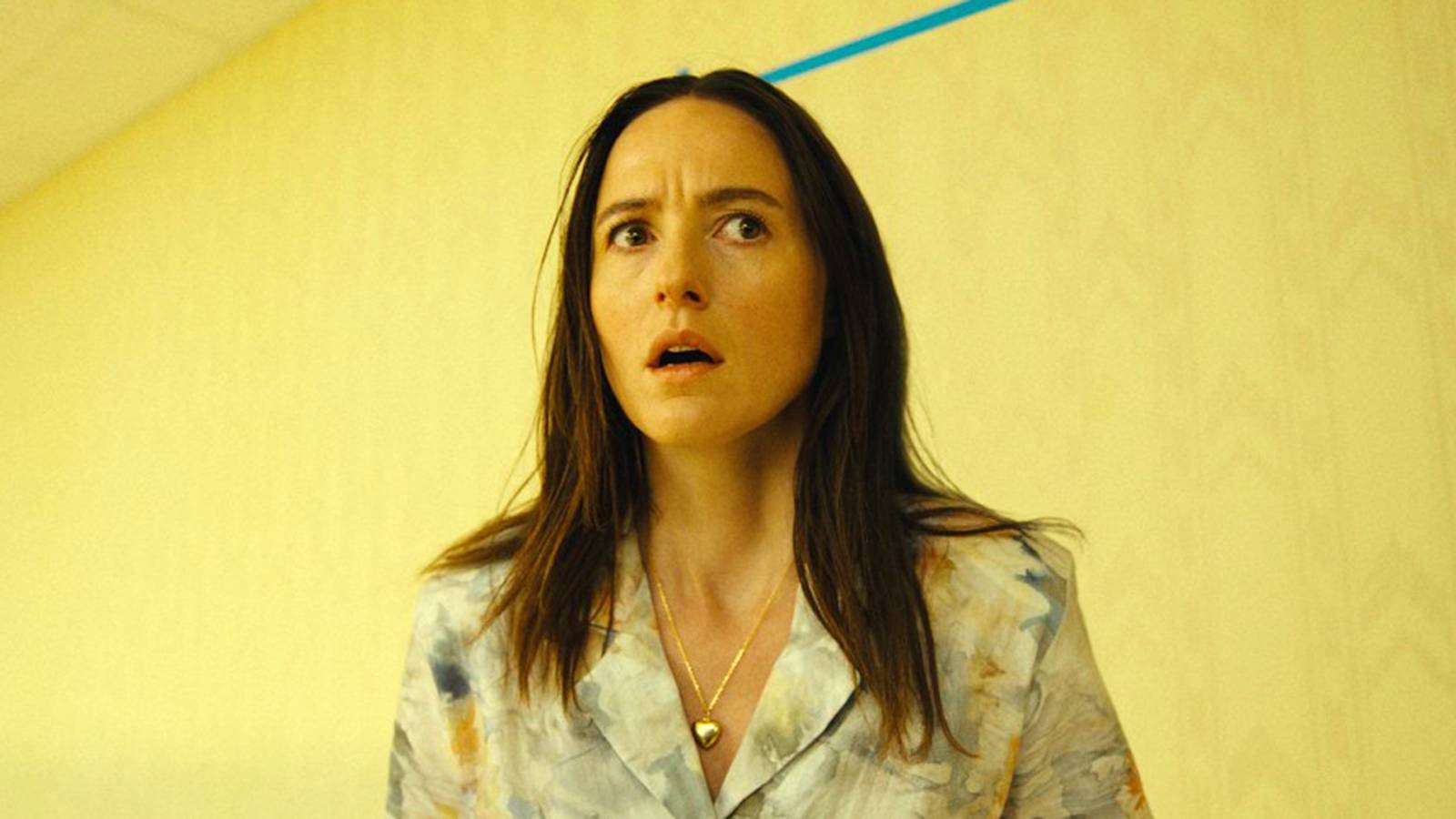
Kane Parsons has brought liminal space horror to the forefront of culture with his hit film Backrooms. The A24 blockbuster has amassed over $200 million at the worldwide box office, making it the studio’s highest-grossing movie yet. As such, the term “liminal” has broken through anthropology niches and online forums into the mainstream zeitgeist.
Liminal refers to a transitional state, while liminal space refers to a transitional location such as a threshold or hallway. Liminal horror plays off of the unsettling mix of comfort and dread these transitional spaces spark. In horror, liminal spaces are often mundane and familiar yet, upon closer inspection, slightly off, inexplicably changing, and defying human comprehension. Characters are drawn into a maddening obsession as they follow their urge to see what is at the end of a hallway, just to find another hallway.
While liminal space is less played out than other facets of horror, it is not unique to Backrooms. There are several intriguing liminal space horror movies, though one of the best such stories appears in print. House of Leaves is thought to have sparked the 21st-century fascination with liminal horror and informed aspects of the online Backrooms lore. Mark Z. Danielewski’s 2000 novel depicts generational obsession over an inexplicable liminal space.
House of Leaves is A Groundbreaking Liminal Space Horror Novel From 2000
Danielewski wrote House of Leaves to process his father’s death. He used liminal space to explore the incomprehensible experience of grief, tied to nostalgia and dread. The author self-published his story online in the 1990s, and it amassed a cult following. Pantheon Books published the full novel in 2000, marking Danielewski’s literary debut (via Penguin Random House). The author’s sister released a companion album to the novel in 2004, Haunted, and thus created an immersive horror experience.
The experimental book became a long-lasting cultural phenomenon that helped inform modern horror—moving from traditional spooks to psychological deconstruction. House of Leaves takes the form of a heavily annotated academic text, written and edited by deteriorating minds. It “follows” a modern protagonist’s descent into madness as he reads through a disjointed academic review of a nonexistent documentary about a house that is bigger on the inside. This maddening academic review, House of Leaves, is now in the hands of the reader.
In the novel, a photojournalist moves into a home that is ¼ inch larger on the inside and discovers a discreet, unsettling hallway that leads to a never-ending labyrinth. An old blind man crafts a scholarly review on a nonexistent documentary about the house. A tattoo artist inherits the old man’s book and too loses his mind obsessing over its pages. House of Leaves reflects fragmented thoughts, increasingly disjointed as they echo through three deteriorating minds.
More an experience than a story, House of Leaves coaxes readers into its winding pages, daring them to get lost.
House of Leaves and Backrooms Use Similar Aspects of Horror

For audiences who found Backrooms uniquely terrifying, House of Leaves offers a similar form of horror. The novel, like the film, uses liminal space to destabilize a constructed understanding of reality.
“I think it’s a phenomenon used to break down the conscious experience of an individual person, and highlights the systems that we put up as a species that push us to that breaking point, but also highlight how arbitrary it all is in the first place,” said Parsons, explaining the liminal space horror of Backrooms to Variety. House of Leaves similarly utilizes liminal space horror as a catalyst for a generational, psychological breakdown that highlights and questions human-constructed reality.
Both stories extend suspense to the point of dread, displaying inexplicable and ever-expanding nothingness, opting for quiet terror over traditional horror. House of Leaves embodies liminal space in concept and form, playing with the arrangement of text on the page.
At their core, both Backrooms and House of Leaves are about obsession; an obsession that propels the characters deeper into an enigma until they are trapped within the paradox. In Backrooms, viewers watch the characters following their obsession into the liminal labyrinth until they are lost. In House of Leaves, readers themselves follow a necessary obsession into the novel’s labyrinth of deconstructed text at the risk of losing themselves within its pages.
Danielewski has indicated that he is not interested in a cinematic adaption of his novel, making Backrooms the closest version of a House of Leaves movie. House of Leaves is a foundational horror text, and a must-read for liminal space horror fanatics.