
Superheroes are the beating heart of American comics, and without Marvel, that heart would be in serious trouble. Starting as Timely Comics, Marvel was quick to follow the debut of Superman with their own costumed crimefighters with heroes like the android Human Torch, Sub-Mariner, and Captain America. But, more than 20 years later, Marvel changed the game with the first appearance of the Fantastic Four. The company’s First Family was soon followed by Spider-Man, Thor, Hulk, and countless others, and the self-titled “Marvel Age of Comics” was born. Now, when Marvel has billion-dollar box office movies, hit TV shows, and even its own theme park, it’s impossible to imagine a world without its superheroes.
But, while it’s the capes and muscles that Marvel is best known for, the publisher has done more that just superheroes. In the nearly 90 years since Martin Goodman launched his company, Marvel has told stories that go beyond the heroes and into other genres. From horror to romance to western to war, there is no story that the company has shied away from, giving readers a variety of amazing tales and shocking stories to dig in to. And while Marvel’s non-superhero works rarely get as much attention as what their Distinguished Competition does in that area, the publisher has been the home to some of the greatest non-superhero comics ever made.
The ‘Nam
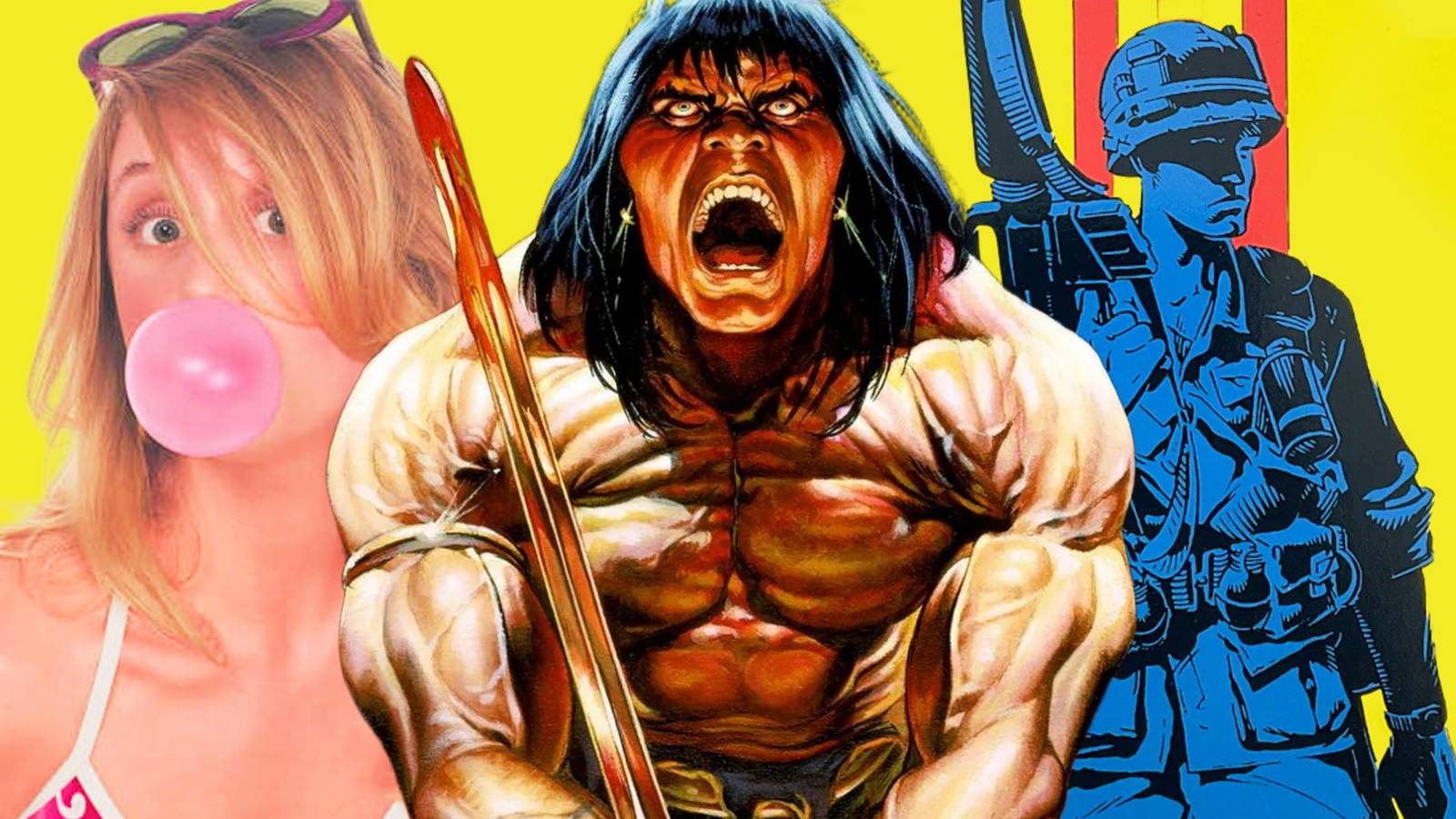
Created by Doug Murray, Larry Hama, and Michael Golden, The ‘Nam was a fictional but very realistic retelling of the Vietnam War. The series, which ran for seven years, happened in real time with a month of time happening between each issue, meaning that 12 issues would equal a year of the war. As part of that, no characters could appear in more than a year’s worth of stories (a full tour of duty) if they lived that long. And characters living that long was far from a sure thing. Murray, who wrote the series, wasn’t afraid to kill characters off in order to properly reflect the reality of the war itself.
The sense of reality in The ‘Nam makes it hard to read at times, and knowing that the book is at least partially based on what Murray and Hama experienced as soldiers in the war doesn’t make it any easier. The series ran for 84 issues, but, sadly, Marvel editorial got in the way and started to demand that the book veer away from reality and include superheroes — namely a pre-Punisher Frank Castle — in the stories. Murray left the book after #51, and the series never had the same bite afterward, but those first 51 issues are a powerful look at a terrible time.
Criminal

While it has since become an Image book, Ed Brubaker and Sean Phillips’ Criminal started off at Marvel under the Icon banner. The series, itself composed of a number of miniseries and one-shots, follows a loose continuity with each story working as stand-alone tales following different protagonists, but reading all of it fills in the whole picture of the Center City underworld.
Together, Brubaker and Phillips have crafted a series that feels like it could be happening in the real world, but with a touch of classic noir to make things really pop. And by allowing each story to follow different characters, the creators can play in different time periods and change up the tone a bit when needed, keeping things fresh. With Criminal about to hit TVs all over the world thanks to Amazon Prime, now is the best time to start reading.
Rawhide Kid

In the years that followed World War II, superheroes fell out of fashion and pretty much any character not named Superman, Batman, or Wonder Woman vanished. In their place came a cavalcade of romance, Western, and horror titles. One western that proved to be endlessly exciting and featured a hero so dynamic that when the superhero came back into fashion, he stuck around was Rawhide Kid.
Originally created by Stan Lee and Bob Brown before Lee and Jack Kirby reimagined him, Rawhide Kid didn’t fit the traditional Western mold, with Kirby drawing him as a rather short and slim man and Lee going against his usual style and making the Kid a soft-spoken fella. But the action that Lee and Kirby were famous for was there. Rawhide Kid proved so popular that his series ran for 151 issues, coming to a close in 1979, well after the Western comic had fallen out of favor with readers.
Sgt. Fury And His Howling Commandos

Before he was an agent of S.H.I.E.L.D., Nick Fury fought in World War II alongside his squad. Created by Stan Lee and Jack Kirby, Sgt. Fury and his Howling Commandos followed the adventures of Fury and the men in the First Attack Squad as they duked it out with the Nazis all over Europe.
The series ran for an impressive 167 issues, starting in 1963 and coming to an end in 1981. During that time, Fury also appeared in superhero books and was even the star of Nick Fury, Agent of S.H.I.E.L.D., which ran from ’68-’71. While Sgt. Fury and his Howling Commandos can get a little weird and wild from time to time, it sticks to the concept and, thanks in no small part to Kirby’s art, was always a dynamic read.
Dakota North

While Dakota North has since joined the 616, the former child model turned private detective’s adventures were originally set out of the publisher’s continuity, allowing Martha Thomases and Tony Salmons to tell an adventure story in the vein of the classic British comic strip Modesty Blaise. Sadly, Dakota’s debut series lasted just five issues in 1986, but that story made enough of an impact that the character continued to randomly pop up in modern Marvel stories, most notably during Christopher Priest’s Black Panther run and in Ed Brubaker’s Daredevil run.
Dakota North was unlike any other American comic at the time, with a strangely independent feel to it, likely because Martha Thomases was a magazine writer and had never written a comic before, and Tony Salmons was just starting out as well. Why the series was canceled after five issues is a mystery. Supposedly, sales were good, but Dakota North was axed so that more money could be put toward Jim Shooter’s New Universe and Marvel’s overall 25th anniversary plans.
Savage Sword Of Conan

Sneaking around the Comics Code Authority by presenting itself as a magazine, Savage Sword of Conan features some of the best work by legends like Roy Thomas, Neal Adams, Barry Windsor-Smith, and John Buscema. And while those icons — among others — handled the interiors, the covers, painted by Joe Jusko, Boris Vallejo, Earl Norem, and Bob Larkin, were sure to capture the imagination of every kid who saw them on the newsstand or in the comic shop.
For many a young reader, Savage Sword of Conan served as their entry into more adult comics, often at a point when they were likely not ready to see what the stories showed. These tales of Robert E. Howard’s creation stand out as some of the best Conan stories ever printed.
Star Wars: Doctor Aphra

Take Indiana Jones, make him a little evil, and put him in the Star Wars Universe and you have Doctor Aphra. Created by Kieron Gillen, Salvador Larroca, Jordan D. White, and Heather Antos Doctor Aphra is a criminal archaeologist who takes on a job for Darth Vader and soon finds herself on the run and faking her own death.
30 Best Superheroes Not Owned by Marvel or DC
Whether they’re a Hellspawn, a vengeful, resurrected spirit or an angry Superman stand-in, these 25 heroes prove you don’t need Marvel or DC.
While the character first appeared in Star Wars: Darth Vader #3, it was in Star Wars: Doctor Aphra itself where most of her adventures have been told. And those adventures have had fans begging Lucasfilm to bring Aphra to the movies and shows for years. Hopefully, new Lucasfilm leaders Dave Filoni and Lynwen Brennan will make those dreams come true soon.
Trouble

What may be the most controversial comic Marvel has ever published, Mark Millar and Terry and Rachel Dodson’s Trouble was initially pushed as a possible new origin story for Spider-Man, but the backlash over the series quickly squashed that. Still, the story itself is wonderfully told and, even if it doesn’t connect to continuity, does something no Spider-Man comic before it ever did: it made Aunt May and Uncle Ben into real people.
The series sees a young May Reilly and Mary Fitzpatrick get summer jobs at a resort where they meet fellow employees Ben and Richie Parker. The four split into twos, as May starts a relationship with Ben and Mary starts one with Richie. The series leads to an ending that enraged fans more than One More Day, but the story, even out of continuity, is wonderfully told and filled with amazing art.
G.I. Joe: A Real American Hero

Just about everything that made G.I. Joe so iconic came from the Marvel comic. G.I. Joe: A Real American Hero took the toy line and, unlike the cartoon, took the concept seriously. Starting with Larry Hama, who is responsible for the best G.I. Joe stories, the series was never afraid to do things no one would expect from a licensed comic series based on action figures.
Characters died. Characters saw their entire belief systems tested. And, without a doubt, #21, “Silent Interlude,” which Hama wrote and drew, is one of the most amazing single-issue comics of all time. G.I. Joe: A Real American Hero was so good that 16 years after it ended, IDW brought in Larry Hama and started the series up again, going for another 145 issues and ending at #300. Then, in 2023, Skybound brought Hama back again and picked up at #301, with the series still going today.
Journey Into Mystery

Before Thor showed up in #83, Journey into Mystery was an anthology series filled with wild tales about ghosts, monsters, and everything else that would give kids nightmares. The series allowed a number of comic book iconcs, like Jack Kirby, Joe Kubert, and Gil Kane to let loose and get strange with it (pun intended) and, in return, readers were rewarded with amazing tales, some of which introduced monsters who still run around in the Marvel universe.
While the stories in Journey into Mystery may not reach the spooky levels of modern horror comics, or even the books EC Comics was publishing, they are still amazing stories created by some of the best talents of the time.